
'Reciprocal tariffs are not going to affect India except specific sectors and there are opportunities to capture.'

Gold prices are likely to remain in a consolidation phase in the near term, but the overall bias will continue to stay positive amid heightened expectations of a US Federal Reserve rate cut in its September policy meeting, analysts said. Traders will closely track US macroeconomic data, such as Q2 GDP, PCE inflation, and speeches from Fed officials, which will provide more insights into the monetary policy stance of the Federal Reserve and the trajectory of the bullion sentiment, they added.

Trump's remarks came amid heightened US messaging about the Iran situation and a series of White House statements indicating that multiple options remain under review.

Two days after Russian President Vladimir Putin concluded his visit to India, during which he assured that Moscow would remain a reliable energy supplier, the Kremlin on Monday said that India, as a sovereign nation, is free to buy oil from sources it deems beneficial. It expressed confidence that New Delhi will continue to prioritise its economic interests.

'For those in for the long haul, this is a God-given opportunity.' 'Your market is falling despite strong fundamentals, and such a clear roadmap has been announced.'

The Indian exporting community is "very" concerned about the possible reciprocal tariffs of the US as it could severely hurt MSME shipments to America in the short run, Federation of Indian Export Organisations President SC Ralhan said on Wednesday. He suggested that the government should come forward and support exporters to deal with these tariffs.

A team of US officials is expected to visit India in the coming weeks for the next round of discussions on the proposed interim trade agreement between the two countries, sources said. The visit gains importance as India and the US are likely to agree on an interim trade agreement before July 9, with New Delhi pushing for full exemption from the 26 per cent reciprocal tariff on domestic goods.

India and the US are likely to agree on an interim trade agreement before July 8 with New Delhi pushing for full exemption from the 26 per cent reciprocal tariff on domestic goods, an official said. The US on April 2 imposed an additional 26 per cent reciprocal tariff on Indian goods but suspended it for 90 days till July 9.

On the table are additional batches of S-400 surface-to-air missile systems from Russia, which India used with immense success during Operation Sindoor. India could buy at least two squadrons of Su-57 fighter jets plus joint production of S-500 air defence systems.
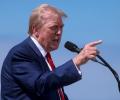
Essential and strategic items such as pharmaceuticals, semiconductors, copper, and energy products like oil, gas, coal and LNG are exempted from the 27 per cent import duty announced by the US on Wednesday, according to think tank GTRI.

With discretionary spending still under pressure, the information technology (IT) services industry continued to face an uncertain demand environment in the third quarter of 2025-26 (Q3FY26).

Equity benchmark indices Sensex and Nifty ended lower on Thursday after US President Donald Trump announced the imposition of a 25 per cent tariff on all goods coming from India starting August 1 and an unspecified penalty for buying Russian crude oil and military equipment.
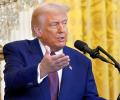
Trump met with his trade team on Tuesday, and the tariffs he announces at a Rose Garden ceremony at 4 pm ET Wednesday will go into effect "immediately," White House Press Secretary Karoline Leavitt said at a press briefing.

India has managed high government debt-to-GDP, a slowing domestic revenue engine, lower household savings and a more hostile geopolitical environment separately in the past. But together, they threaten to undo the growth narrative on which today's optimism rests, warns Debashis Basu.
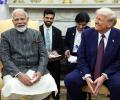
"Their Prime Minister just visited -- he's a great friend -- but I told him, 'You're not treating us right. You charge us 52%, while for years, decades even, we've c'harged you next to nothing. It wasn't until seven years ago, when I took office, that we started pushing back, beginning with China.'"

The rupee plunged 26 paise to an all-time low of 90.75 against the US dollar in intra-day trade on Monday, weighed down by uncertainty over an India-US trade deal and persistent foreign fund outflows.

US President Donald Trump on Thursday claimed that India has offered to drop all tariffs on American goods. Speaking at a business roundtable in Doha, Trump also said he had a "little problem" with Tim Cook, and he told the Apple CEO that he does not want him to build iPhones in India.
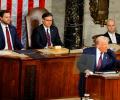
I'...additional concessions, such as opening government procurement, reducing agricultural subsidies, weakening patent protections, and allowing unrestricted data flows -- demands India has resisted for decades.'
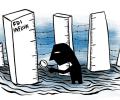
The Centre is regularly holding consultations with stakeholders to streamline foreign direct investments (FDIs) and foreign institutional investments (FIIs) related processes to enable faster and more efficient investment flows into the country, said Commerce and Industry Minister Piyush Goyal, adding one such meeting with stakeholders was held on Tuesday.
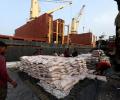
The government on Wednesday approved two schemes worth Rs 45,000 crore to help exporters tide over the impact of high tariffs imposed by the US on Indian shipments.

'The bigger unknown remains global geopolitics, which is inherently unpredictable, including developments in our neighbourhood.' 'Another concern is the increasing tilt of government finances towards welfare subsidies, especially at the state level.' 'This could constrain capital expenditure, which is critical for long-term growth.'

'A breakout above 158,000 to 160,000 could trigger the next leg higher toward 165,000 to 170,000.'
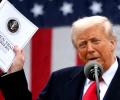
United States President Donald Trump has imposed a 10% tariff on most US imports, with even higher rates for China (34%), India (26%), Japan (24%) and the EU (20%), escalating a global trade war.

The commerce ministry is working on different scenarios to assess the possible fallout of reciprocal tariffs to be imposed by the US administration on April 2 on its key trading partners including India, sources said. US President Donald Trump has said that April 2 will be 'Liberation Day' as he plans to announce tariffs or import duties to bring down America's trade deficit, and promote the country's manufacturing.

'India did not surrender. That was why he wanted to pressurise India by this 25% tariffs.'
'What the US appears to be doing is to force India to be "the buyer of last resort", on whom their products can be dumped, 1.4 billion people have to eat something, so why not eat American corn?' 'What is exercising the Trump lot is the fact that most of the farms are in solidly Republican Midwestern states: Illinois, Indiana, Kansas, Michigan, Minnesota, Missouri, Nebraska, North Dakota, Ohio, South Dakota, Wisconsin,' points out Rajeev Srinivasan.

The Reserve Bank of India (RBI) on Friday delivered a 25 basis point (bps) repo rate cut analysts expected, driven by the strong 8.2 per cent GDP growth in the September quarter. However, analysts do not expect a runaway market rally as the impact of US tariffs continues.
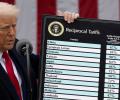
US President Donald Trump has proposed a deal to China that would see the sale of TikTok's US operations to an American buyer in exchange for a reduction in tariffs on Chinese exports to the US. The proposal comes amid a trade war between the two countries and follows China's retaliation of Trump's tariffs on Chinese goods. Trump has also said that tariffs are a powerful economic tool and that he is determined to ensure fair trade between the US and China.
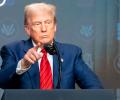
President Trump addresses questions about US imports from Russia and India's stance on purchasing Russian oil, hinting at potential tariffs.

Uncertainties over the impact of the United States' (US') tariffs on India, along with the ongoing transmission of past rate cuts, prompted the members of the Reserve Bank of India's Monetary Policy Committee (MPC) to maintain the status quo during the August meeting, the minutes showed. While some of the external members highlighted their concern over growth, the internal members cited the one-year headline inflation rate overshooting the 4 per cent target.
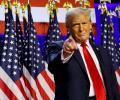
American President Donald Trump has announced imposing reciprocal tariffs on its major trading partners including China that levy higher import duties on goods shipped from the United States. He has already announced a 25 per cent duty on steel and aluminium imports, which will come into effect from March 12.
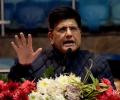
Commerce and Industry Minister Piyush Goyal will lead a team of senior Indian officials to Washington starting May 16 for discussions with their US counterparts on the proposed bilateral trade agreement (BTA), an official said on Tuesday. Goyal is expected to hold meetings with US Trade Representative (USTR) Jamieson Greer and US Commerce Secretary Howard Lutnick during his visit.

As the rupee remains under pressure due to several headwinds and the uncertainty around the India-US trade deal, the Reserve Bank of India (RBI) has been stepping in only to calm volatility, not to stop the fall.
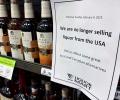
'We have to be prepared for the larger disruption that is likely to take place.'

This is the first Budget in my memory of Budgets over the last half a century which has embraced upfront, enthusiastically and emphatically, technology, modernity and fiscal sobriety, notes Shreekant Sambrani.

Domestic markets saw the addition of nearly 3 million new dematerialised (demat) accounts in July, marking the highest monthly increase since December 2024. This is also the third consecutive month that witnessed a rise in account openings, following a period of moderation from January to April.
Commerce and Industry Minister Piyush Goyal on Tuesday expressed hope that India will conclude the proposed bilateral trade agreement (BTA) with the US by the fall or November this year. He said that "a little bit" of geopolitical issues overtook the trade matters in the negotiations for the pact between the two countries.
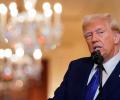
Moody's Ratings on Wednesday said US tariffs will weaken credit conditions and raise defaults risks especially for low-rated and speculative grade corporates. It said that an unpredictable US trade policy will lead to a deterioration in global credit conditions and macroeconomic impact will slow growth with a growing possibility of recession.

'The outlook for the next Samvat is more constructive, as many of the earlier drags are gradually becoming supports.'
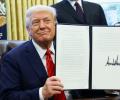
The Trump trade shock is a chance to push long-overdue reforms, rather than tinker with tariffs to appease the US, suggests M Govinda Rao.
 © 2026 Rediff.com - Advertise with us - Disclaimer - Privacy Policy - Sitemap - Feedback - About us - Terms of use - Grievances